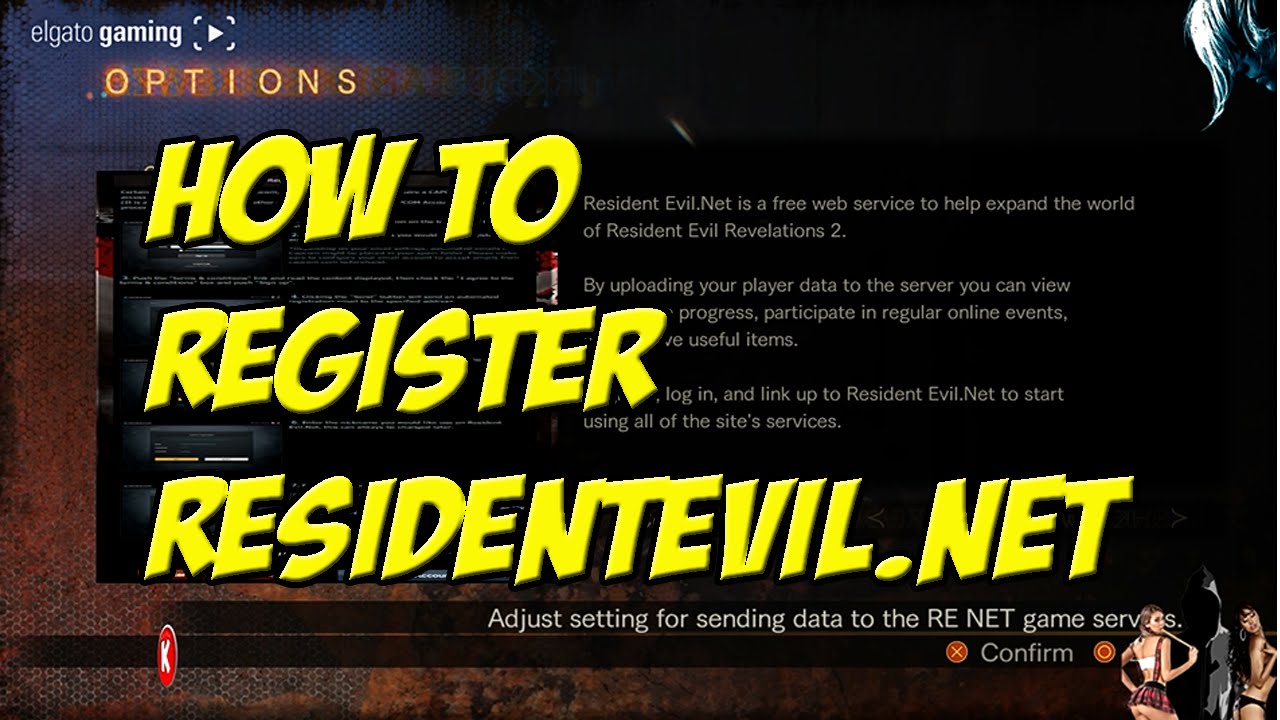
Unearthing the Enigma: What Was Resident Evil .Net?
The vast universe of Resident Evil, spanning decades of iconic survival horror, harbors a few enigmatic corners. One such area is Resident Evil .Net, a name that resonates with a certain intrigue among long-time fans but often elicits blank stares from newer players. What exactly was this digital platform, and why does finding comprehensive information about it feel like navigating a haunted mansion in the dark?
While definitive, easily accessible archives are scarce, historical context suggests that Resident Evil .Net served as Capcom's official online portal dedicated to enhancing the player experience for various Resident Evil titles. Much like other major gaming franchises or publishers with their own online hubs (e.g., Ubisoft Connect, older versions of Rockstar Social Club), RE .Net was designed to foster community, track player progress, and offer supplementary content beyond the core game. It likely launched or gained prominence around the era of titles like Resident Evil 6 and Resident Evil Revelations, which emphasized online co-op and competitive modes, making an integrated web service a natural extension.
Based on the typical features of such portals, we can infer that Resident Evil .Net probably offered a suite of functionalities including:
- Player Statistics Tracking: Detailed records of kills, headshots, completion times, and other in-game achievements, allowing players to compare their prowess with friends and global leaderboards.
- Event Participation: Hosting time-limited online events, challenges, or community goals that offered unique rewards, emblems, or in-game currency.
- Exclusive Content & Rewards: Potentially offering wallpapers, character costumes, weapon skins, or other digital items that could be unlocked by accumulating points or participating in events on the portal.
- Community Features: Forums, news updates, developer blogs, or social integration to connect players and keep them engaged with the latest Resident Evil happenings.
- Game Connectivity: Seamless integration with specific Resident Evil titles, allowing players to link their in-game progress with their online profile on RE .Net.
For a period, Resident Evil .Net was a vibrant, active hub intended to deepen player engagement and provide a persistent online presence for the franchise. It aimed to be more than just a website; it was a digital extension of the terrifying world players loved, providing a layer of meta-gameplay that encouraged continued interaction with the series.
The Digital Black Hole: Why Information on Resident Evil .Net is Scarce
Despite its likely significance at the time, trying to find concrete, historical data about Resident Evil .Net today is akin to searching for clues in a long-abandoned mansion: most of the evidence has vanished. The common experience, as demonstrated by attempts to scrape information from reputable sources like the Resident Evil Wiki or Resident Evil Portal, often leads to empty pages, error messages, or generic cookie consent forms. This lack of readily available information creates what we can accurately call a "digital black hole" around the service.
Several factors contribute to this profound scarcity of data:
- Ephemeral Nature of Online Services: Web portals and online services, especially those tied to specific game lifecycles, are inherently dynamic. Their content is constantly updated, changed, or removed. News articles become outdated, event pages disappear once the event concludes, and features evolve. Unlike a static webpage or a printed manual, the internet's "live" nature means that old content rarely remains in the foreground.
- Server Shutdowns and Decommissioning: When Capcom or a third-party developer decides to discontinue support for an online service, the associated servers are often shut down. This means all content hosted exclusively on those servers—databases, user profiles, event histories, and unique web pages—simply cease to exist publicly. Unless proactively archived, this data is lost to the wider internet.
- Lack of Comprehensive Archiving: While some major companies maintain historical archives, the cost and effort involved in preserving every iteration of a temporary online portal can be prohibitive, especially for services deemed less critical once their primary function is over. Publicly accessible archives are even rarer.
- Technical Challenges for Archivers: Many online portals are not built with static HTML pages but rely heavily on databases, APIs, and dynamic content generation. Traditional web scrapers, which capture static snapshots, struggle with this. When the backend database is offline, the pages simply don't generate content, leading to the "empty document" errors encountered when trying to retrieve information.
- Niche Archival Interest: While the Resident Evil franchise is massive, a specific ancillary service like Resident Evil .Net might not have garnered enough dedicated historical interest from third-party archivists (like the Internet Archive's Wayback Machine) to warrant comprehensive and frequent captures of its entire dynamic content. What was archived might only be the front page or general announcements.
The difficulty in finding data is a stark reminder of the Resident Evil .Net: Why Finding Data is a Challenge that digital historians and dedicated fans face when trying to reconstruct the full picture of past online gaming experiences. It highlights how easily parts of gaming history can simply vanish, leaving behind only fragmented memories and unanswered questions.
Scraping for Ghosts: The Futility of Finding Archived Content
The very premise of trying to "scrape" information about Resident Evil .Net from the current web often leads to the exasperating discovery that there's little to scrape. As the reference context showed, automated crawling tools frequently return errors like "Document is empty" or encounter barriers such as detailed cookie consent pages that prevent access to any underlying content. This isn't just a technical glitch; it's symptomatic of the fundamental challenge in preserving and accessing defunct online gaming services.
When a web service like Resident Evil .Net is decommissioned, the active pages that once displayed player stats, event news, or community posts are either taken down, redirect to a general portal (like the current Resident Evil Portal, which itself provides no historical RE .Net content), or simply remain as empty shells. A scraper, designed to read and interpret visible text and links, finds nothing because there's genuinely nothing there anymore. The "Crawl4AI Error" messages are not just failures of the tool, but reflections of the web's present state regarding this specific historical entity.
This situation underscores the concept of "digital decay." Unlike physical artifacts that might degrade over centuries, digital content can vanish almost instantaneously when servers are shut down or databases are wiped. For fans and researchers eager to understand the full scope of a game's ecosystem, this presents a significant hurdle. How can one study player behavior, event impact, or community engagement if the very platform where these interactions occurred has been erased?
So, if direct scraping is largely futile, what avenues remain for those attempting to piece together the history of Resident Evil .Net? The task becomes one of digital archaeology, requiring a different set of tools and a lot of patience:
- The Internet Archive (Wayback Machine): This is perhaps the most crucial resource. The Wayback Machine periodically archives snapshots of websites. While it might not have captured every dynamic page or all database-driven content, it could hold visual evidence of RE .Net's interface, general layout, and key announcements from various points in its operational life.
- Fan Forums and Communities: Old threads on Reddit, GameFAQs, or dedicated Resident Evil forums might contain discussions, screenshots, or personal accounts from players who actively used RE .Net. These anecdotal records, though not official documentation, can provide invaluable context and visual cues.
- YouTube Videos: Gameplay videos or "let's plays" from the era when RE .Net was active might inadvertently show glimpses of the portal's interface, or feature players discussing its events and rewards.
- Gaming News Archives: Older gaming news websites or blogs might have articles announcing the launch of RE .Net, promoting its features, or reporting on specific events it hosted. These can provide factual anchors, even if the portal itself is gone.
Ultimately, Scraping for Resident Evil .Net: The Search for Content becomes less about automated data extraction and more about manual, detective-like work, piecing together fragments from scattered digital remnants. It's a testament to how easily parts of our interactive digital history can become inaccessible, existing only as fleeting memories or in the most obscure corners of the web.
The Legacy and Lessons Learned from Resident Evil .Net
While Resident Evil .Net might have faded into obscurity for many, its existence and subsequent disappearance offer valuable insights into the lifecycle of online gaming services and the broader challenges of digital preservation. For the Resident Evil community, it represents a period of enhanced player interaction, a time when additional layers of engagement were actively cultivated outside the main game itself.
Its legacy is twofold. On one hand, it showcased Capcom's commitment to building a connected experience around its flagship horror series, offering competitive and communal aspects that many players appreciated. It aimed to prolong the lifespan of games by providing reasons to keep coming back, chase new stats, or unlock exclusive content. For those who actively participated, it was likely an integral part of their Resident Evil experience for a time.
On the other hand, the current difficulty in finding information about Resident Evil .Net serves as a potent cautionary tale. It underscores the ephemeral nature of online-only content and the critical importance of digital archiving. For game developers and publishers, it's a lesson in the responsibility of preserving the history of their own creations. When an online service shuts down, the experiences and data generated by players on that platform risk being lost forever, fragmenting the narrative of that game's complete history.
For players and gaming enthusiasts, the "digital black hole" of Resident Evil .Net highlights the need to appreciate and, where possible, contribute to archival efforts. Taking screenshots, recording gameplay footage that shows online interfaces, or participating in community-led preservation projects can help prevent future historical gaps. It reminds us that while games themselves might be preserved, the dynamic, interactive ecosystems built around them are far more fragile.
The story of Resident Evil .Net is not just about a forgotten website; it's about the broader challenges of digital heritage, the impermanence of online content, and the ongoing effort to ensure that the rich, evolving history of video games is not lost to the sands of time.
In conclusion, Resident Evil .Net was likely a significant, albeit now elusive, online portal designed to enrich the Resident Evil player experience through stats, events, and community features. Its current status as a "digital black hole" where information is exceptionally difficult to find is a poignant example of how easily online gaming history can vanish. It serves as a powerful reminder for both creators and consumers of the importance of digital preservation and the ongoing challenge of documenting the ever-evolving world of video games.